
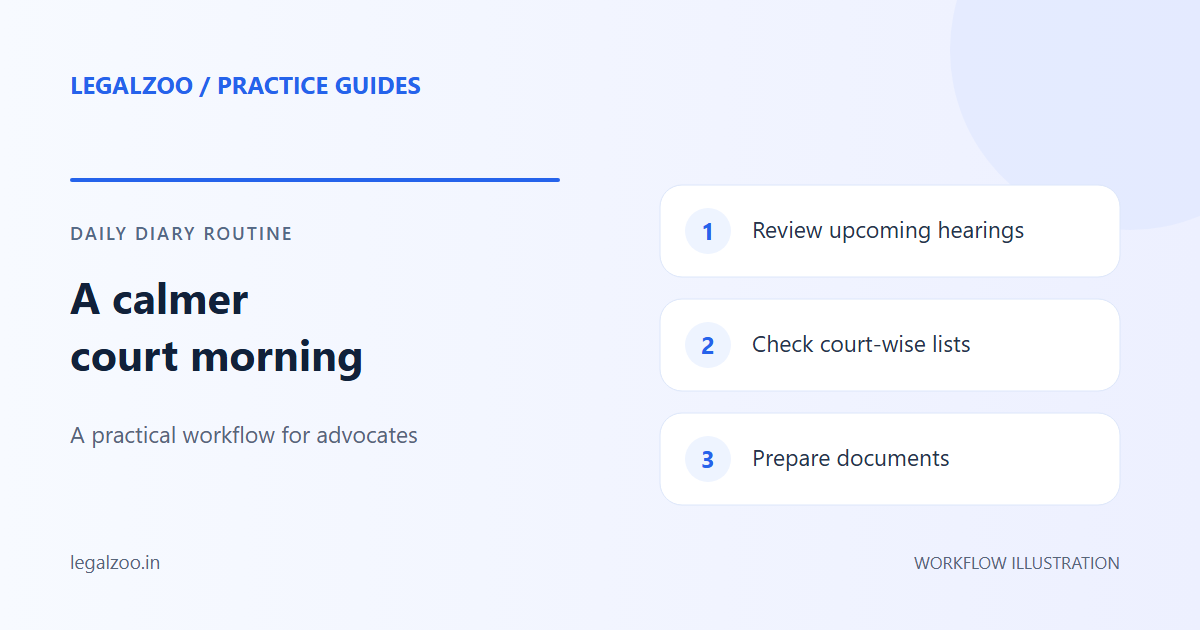
Build the daily diary from verified case dates, group matters by court, check the published lists, and record outcomes after the hearing. Keep the source and last-check time visible.
Prepare the day's matters
Start with cases showing today's hearing date, then reconcile them with the published lists for the relevant courts. A diary reminder and a cause-list entry are separate records; neither should silently replace the other.
For a chamber working across Tis Hazari, Saket or another Delhi complex, grouping by court makes travel and coordination easier. A serial number is not an appointment time, so avoid planning travel around an assumed calling time.
Keep these fields for each matter
| Field | Why it matters |
|---|---|
| Full CNR and parties | Distinguishes connected or similarly named cases. |
| Court, establishment and judge | Helps identify the correct board. |
| Hearing date and list date | Avoids confusing a future hearing with today's list. |
| Source and last checked time | Shows whether the information needs refreshing. |
| Chamber notes and documents | Supports preparation without changing the court record. |
Mark a personal instruction, proposed step or unverified update as a note. Do not present it as an official court direction.
Before leaving for court
Check any newly published notice through the official Delhi district court websites. Make sure essential saved PDFs open and the colleague handling the matter has the correct information through your agreed chamber process.
If retrieval is unavailable, retain the last correct records and identify what remains unverified. A saved list is useful during an outage but should not be labelled current merely because it loaded quickly.
After the hearing
Record what was observed, obtain the published order when available, and reconcile the next date with the official record. Review any calendar entry that may now need updating.
See digital diary setup and cause-list retrieval.